Pursuing a Fully Funded PhD in the UK:

A Roadmap to Academic Success


Udeshi Salgado
Data Lab for Social Good Research Group
Cardiff Business School, Cardiff University, UK


2025-07-30


Outline


  1. Getting into the Statistics Special Degree Program
  2. Life as a Statistics Honours Student
  3. Securing Scholarships and Adapting to PhD Life
  4. Life as an Overseas Student

Getting into the Statistics Special Degree


Why I Chose Statistics

  • Unique value of the Statistics Special Degree at USJ
  • Broad applicability across diverse fields
  • Equips you for pursuing a PhD without a Master’s

What Helped Me Get Selected

  • Maintained consistent performance in assignments
  • Took mid-semester exams seriously
  • Maintained high lecture attendance
  • Achieved a high GPA (above 3.4) in Statistics

Recommendations

  • Focus on mastering basic statistics which forms the foundation for later coursework
  • Maintain a strong GPA in all three subjects, not just statistics
  • Don’t hesitate to ask questions and actively engage in class
  • Build good relationships with lecturers; they can guide and support your progress
  • If possible, join ongoing departmental projects for early research exposure
  • Learn programming languages such as Python and R, and explore cloud tools like AWS as well as query languages like SQL.


Outline


  1. Getting into the Statistics Special Degree Program
  2. Life as a Statistics Honours Student
  3. Securing Scholarships and Adapting to PhD Life
  4. Life as an Overseas Student

Life as a Statistics Honours Student

Academic Journey

  • Built a strong statistical foundation
  • Improved soft skills through Statistical Seminar
  • Real-world exposure via Statistical Consultancy
  • Industry field visits and cross-domain experience
  • Developed strong bonds with lecturers

Research & Internship Highlights

  • My impactful BSc thesis in data science applied to dentistry, featuring the AIdentist app and a novel data augmentation method, played a key role in securing direct fully funded PhD program
  • Gained practical experience as a Data Analyst Intern at Vizumatix

Leadership & Societies

  • Editor of Statistics Society USJ and CSM and chaired two impactful Rotaract projects
  • Gained event management, teaching, and training experience
  • Currently Social Media Head at DL4SG Research Group


Outline


  1. Getting into the Statistics Special Degree Program
  2. Life as a Statistics Honours Student
  3. Securing Scholarships and Adapting to PhD Life
  4. Life as an Overseas Student

Why Choose to Do a PhD?

  • Self Growth
  • Opportunity to Explore a Topic in Depth
  • Read, Learn, and Discover Continuously
  • Develop Critical Thinking and Problem-Solving Skills
  • Build a Global Academic and Professional Network
  • Open Doors to Academic, Industry, and Research Careers

Why Choose the UK?

  • Shorter Duration (Typically 3–4 Years)
  • Access to Funding and Scholarships
  • Additional funding to attend seminars, conferences, and other events
  • Possibility to teach as an extra income (Graduate Tutor/ RA Opportunities)
  • Post-Study Options: PhD graduates can stay in the UK for up to 3 years via the Graduate Route or apply for the Global Talent visa for a flexible path to settlement in academia or research
  • Gateway to Europe and Beyond

Scholarships and Funding Options

  • Commonwealth Scholarship – Fully funded; includes on-campus, distance learning and split-site pathways (for PhD students in eligible Commonwealth countries to spend up to 12 months in the UK).
  • Chevening Scholarship – Primarily for Master’s; limited PhD opportunities
  • UK Research and Innovation (UKRI) Studentships – Offered via DTPs/CDTs
  • University Scholarships – e.g., Gates Cambridge, Clarendon (Oxford), CRABS (Cardiff)
  • Industrial Funding – Supervisor may fund you via industry-sponsored projects

UKRI Studentships

  • Fully funded: Tuition + £19,000+ annual stipend
  • Offered via DTPs (Doctoral Training Partnerships) and CDTs (Centres for Doctoral Training)
  • Available across 9 research councils (EPSRC, ESRC, AHRC, etc.)
  • More info: ukri.org

UKRI PhD Funding Paths


flowchart LR
  classDef bigNode fill:#2780e3,stroke:#333,stroke-width:2px,font-size:16px,color:#fff

  PhD["   PhD<br/>Application   "]:::bigNode --> SupervisorLed["   Supervisor-led<br/>Path   "]:::bigNode
  PhD --> StudentLed["   Student-led<br/>Path   "]:::bigNode

  SupervisorLed --> GrantApply["   Supervisor Applies<br/>Directly   "]:::bigNode
  GrantApply --> GrantReceived["   Grant<br/>Received   "]:::bigNode
  GrantReceived --> PublishPHD["   Supervisor Publishes<br/>the PhD   "]:::bigNode
  PublishPHD --> Interview["   Interview    "]:::bigNode
  Interview --> SelectCandidate["   Candidate Selection   "]:::bigNode

  StudentLed --> StudentApply["   Student Applies<br/>Directly   "]:::bigNode
  StudentApply --> Decision{"   Supervisor<br/>Selection   "}:::bigNode

  Decision -->|By Student| Offer1["   Student Finds a<br/>Supervisor   "]:::bigNode
  Decision -->|By University| Offer2["   University Assigns<br/>Supervisor   "]:::bigNode

  Offer1 --> PublishPHD1["   Interview   "]:::bigNode
  Offer2 --> PublishPHD1
  PublishPHD1 --> SelectCandidate1["   Grant<br/>Received   "]:::bigNode

How to Find PhD Opportunities?

  • FindAPhD.com – Main platform for funded and self-funded PhD listings in the UK and globally
  • University Websites – Check departmental pages, scholarship sections, and project listings
  • Contact potential supervisors – Read recent publications and email with a tailored proposal
  • UKRI Studentships – Doctoral Training Partnerships (DTPs) and Centres for Doctoral Training (CDTs)
  • LinkedIn – Follow researchers, research groups/centers (eg: DL4SG) and institutions for live PhD postings

What You Need to Prepare Before Applying

Academic & Documentation Requirements

  • Minimum Qualifications: UK first/upper-second class honours degree or equivalent, or a Master’s degree (could be change on the studentship)
  • Proof of English Language Competency: IELTS score of 6.5 overall (minimum 5.5 per subskill)
  • 2 academic or professional references: candidates must approach referees themselves and include references with their application. The reference must detail the applicant’s research strengths
  • Degree certificates and transcripts (including translations if applicable)
  • Research Proposal
  • Academic CV: Include education, research, publications, skills, and achievements
  • Cover Letter:
    • Summarize academic background, key achievements, research interests
    • Describe proposed research idea and how it aligns with the supervisor’s work
    • Mention relevant skills, publications (if any), and enthusiasm for the field
    • Show awareness of supervisor’s work by referencing recent papers
    • Add extracurricular interests to show a well-rounded profile

Financial Requirements (Estimates for 2025)


Item Cost..GBP. Approx..Cost..LKR.
IELTS Test £200 LKR 80,000
Student Visa Fee £490 LKR 196,000
NHS Health Surcharge (1 year) £776 LKR 310,400
Air Ticket (SL to UK) £600 LKR 240,000
Accommodation Prepayment £250 LKR 100,000
TB Test £45 LKR 18,300

How to Prepare for the Interview?

  • Know your research topic and related literature thoroughly
  • Clearly explain your motivation and what the committee gains by selecting you
  • Understand the theoretical background relevant to your project
  • Reflect on your practical experience and have a draft research methodology
  • Be honest about your knowledge and show eagerness to learn
  • Be specific about your post-PhD plans and maintain a humble, growth mindset

Post-Offer Process for PhD Students

  • Submit all requested documentation to the university
  • Wait to receive your Confirmation of Acceptance for Studies (CAS)
  • Check that all scholarship details are included in the CAS
  • Take the Tuberculosis (TB) test at an approved centre (if required)
  • Apply for your UK Student Visa once you have the CAS
  • Book your visa appointment and prepare necessary documents
  • Plan your travel and accommodation after visa approval

Top Tips

  • Start searching early (at least 1 year in advance)
  • Be flexible with your topic to align with funded projects
  • Regularly check FindAPhD.com, UKRI, and university scholarship pages
  • Always connect with a potential supervisor first; many scholarships require their support
  • Avoid emailing multiple supervisors in the same area simultaneously; if needed, ask for recommendations
  • Create a portfolio website to showcase your work, and maintain Git repositories for your completed projects


Outline


  1. Getting into the Statistics Special Degree Program

  2. Life as a Statistics Honours Student
  3. Securing Scholarships and Adapting to PhD Life
  4. Life as an Overseas Student

Life as an Overseas Student
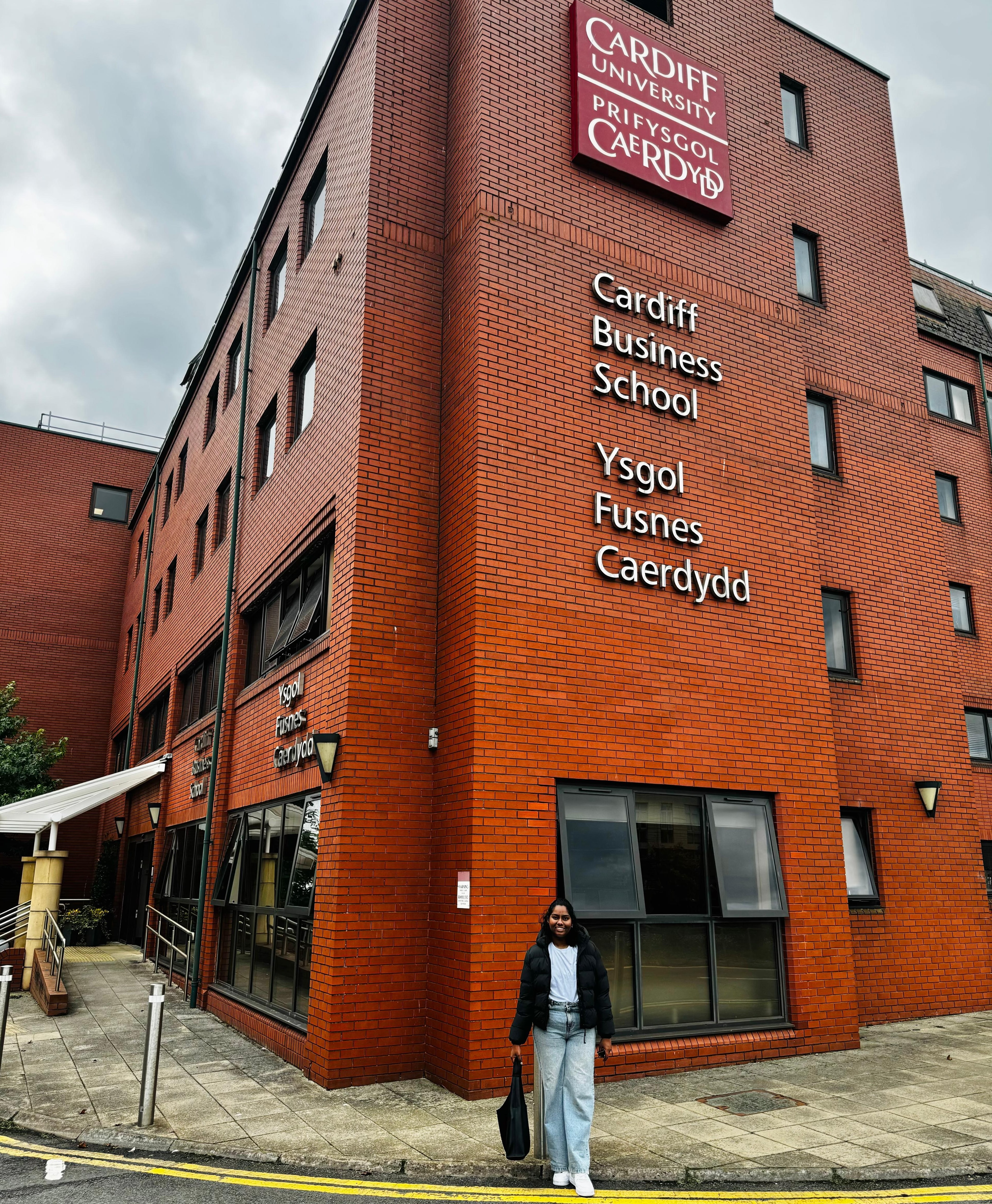
Life as an Overseas Student



About me


Udeshi Salgado

1st year PhD Student

DL4SG, Cardiff University, UK


LinkedIn: udeshi-salgado

Slides: udeshisalgado.github.io/talks

Outline of my talk


  1. Getting into the Statistics Special Degree Program
  2. Life as a Statistics Honours Student
  3. Securing Scholarships and Adapting to PhD Life
  4. Life as an Overseas Student