Distributional Post-Processing for Vaccine Demand Forecasting at the Operational Level in Low- and Middle-Income Countries


Udeshi Salgado, DL4SG, Cardiff University, UK
Lead Supervisor: Professor Bahman Rostami-Tabar
Co-supervisors: Dr Thanos E Goltsos, Dr Geraint Palmer, Dr Xun Wang

11 June 2026

Background

  • 1 in 5 children worldwide still lack access to essential vaccines.

  • A key operational contributor is inefficiency in vaccine supply chains.

  • In low- and middle-income countries, these inefficiencies often involve:

    • inaccurate demand forecasts
    • inventory decisions made under limited uncertainty information
    • wastage and stockouts

Vaccines


Vial

Dose

Administered

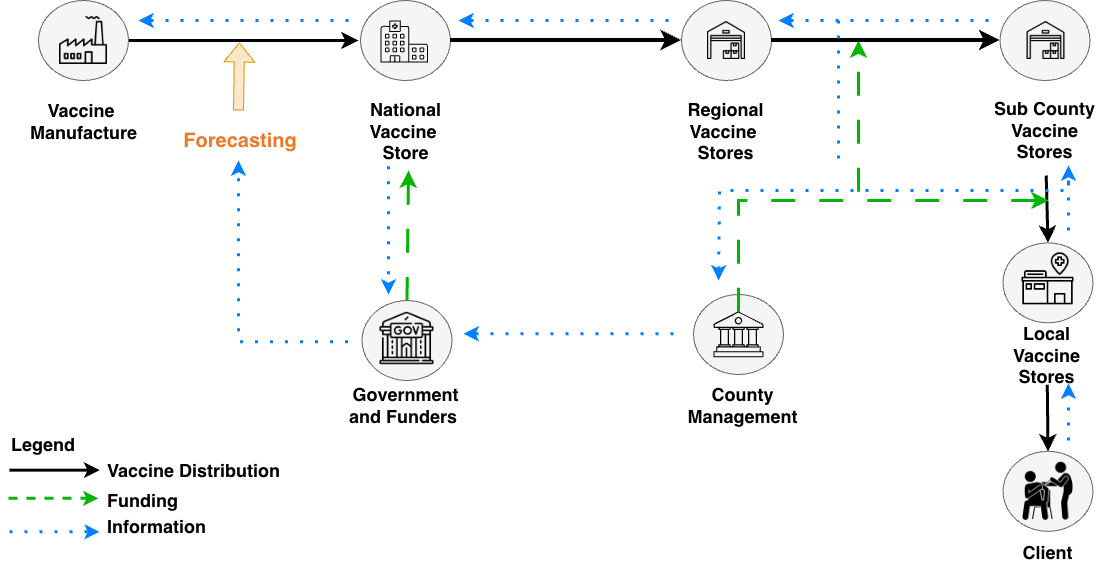
The Immunisation Supply Chain
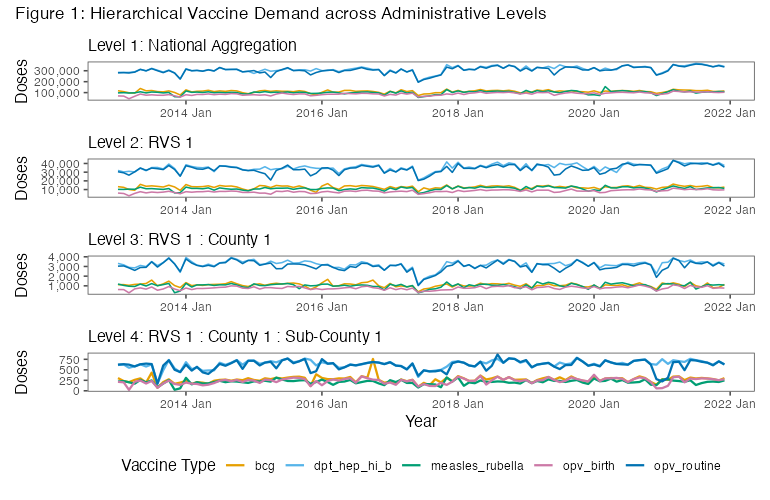
Why Operational Administrative Level?
The Gap & The Question

  • In practice, the Forecasting, Supply Planning and Procurement (FSP) Tool relies on static demographic targets and produces point forecasts only, with no representation of uncertainty.
  • In academia, existing studies focus on aggregate planning levels and point forecast accuracy, with little attention to probabilistic forecasting at the operational level in LMICs.
  • Forecast distributions are not constrained to feasible values: negative doses and quantities exceeding the eligible population.

Research Question

How well do statistical, ML, DL, and foundation time-series methods forecast routine childhood vaccine doses probabilistically at the operational level in LMICs, and can FSP-informed distributional post-processing improve the feasibility and quality of forecast distributions?

Methodology

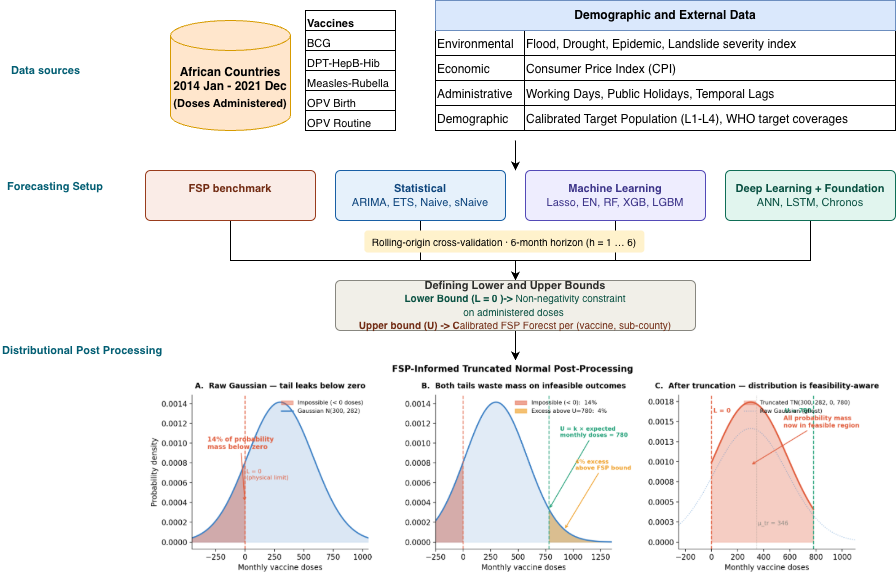
Distributional Post Processing
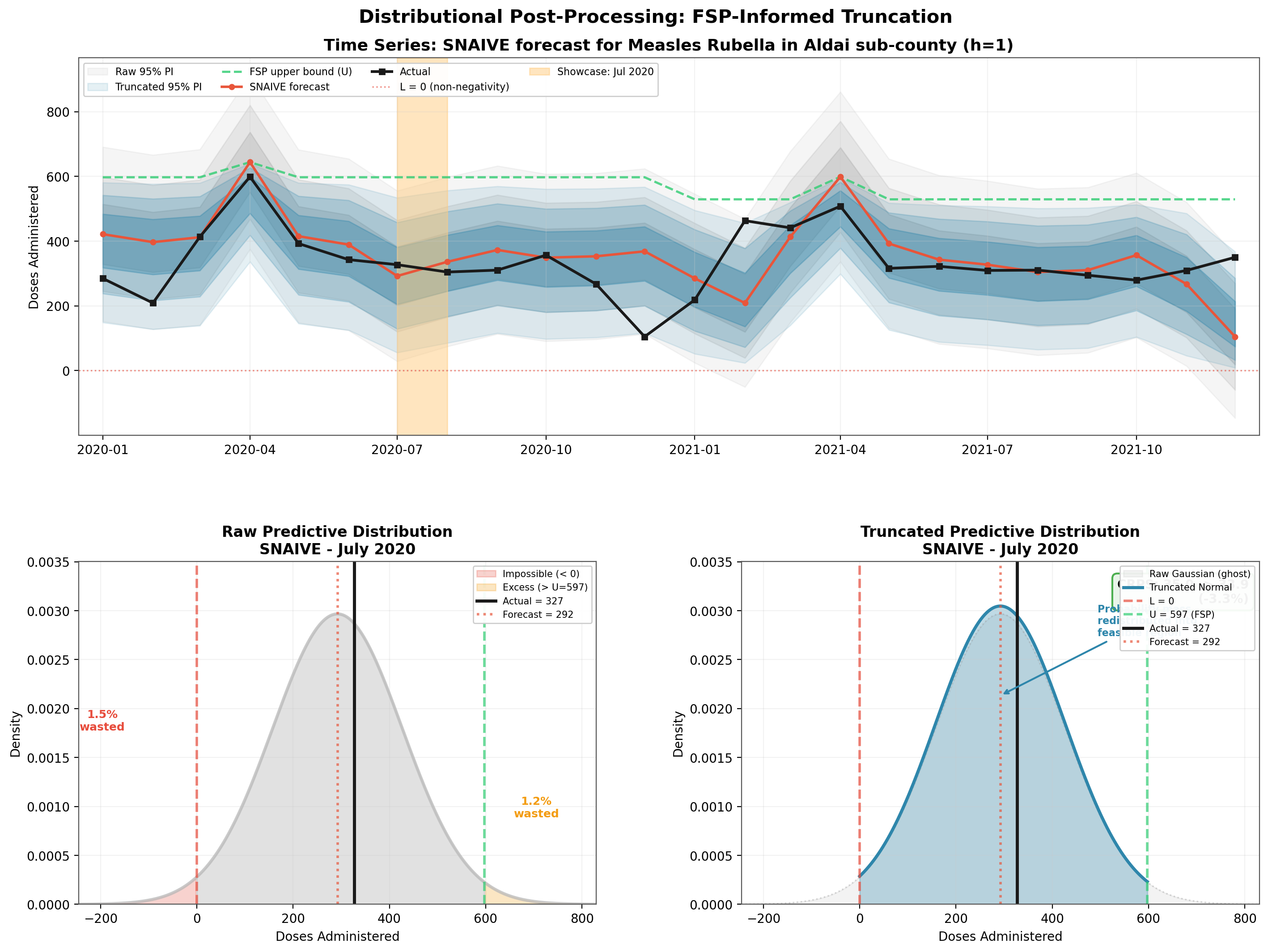
Key Results

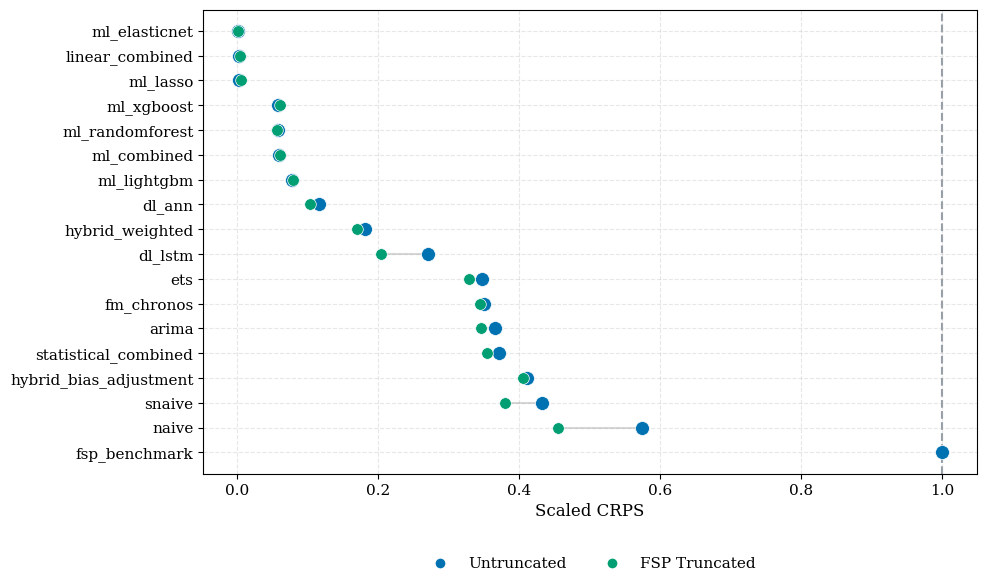
Scaled CRPS
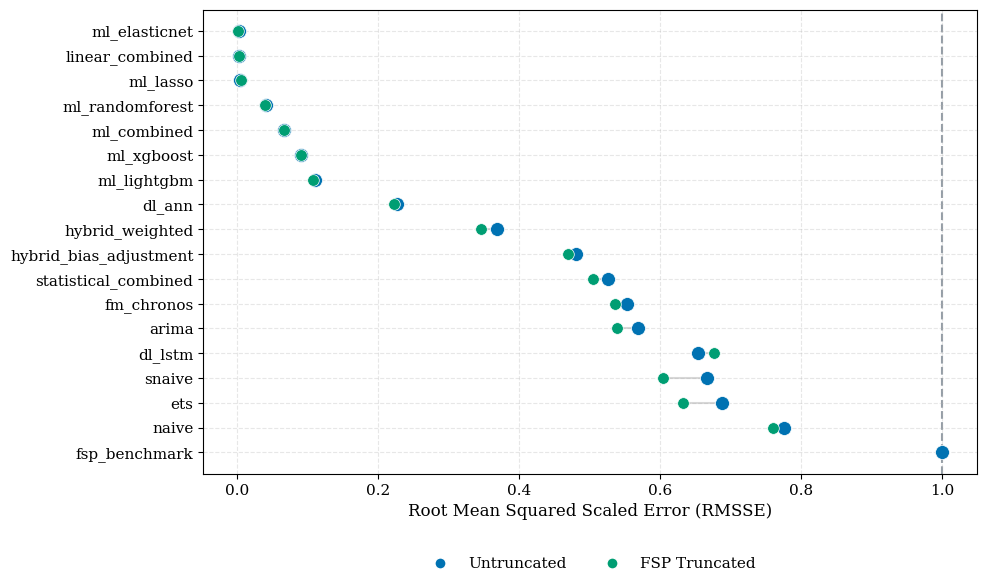
RMSSE
Thank you!